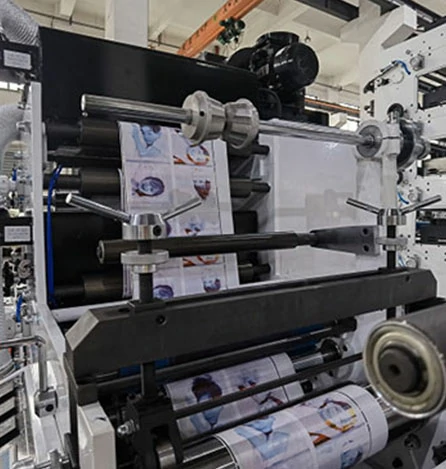
A label converter ran a job for a pharmaceutical supplier. The die‑cut window on each label had to land within a hair’s width of the printed registration mark. Their existing mechanical‑gear cutter drifted by 0.3mm after 2,000 sheets, sending the last 8,000 labels to the reject bin. The maintenance team found the cause: the paper guide was machined to a general tolerance, and the slitting knives had uneven wear from the previous shift’s setup.
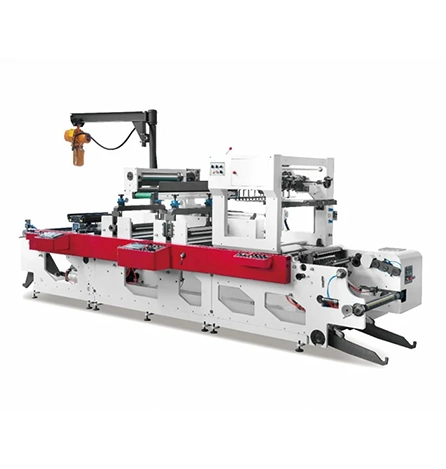
The Hongsheng rotary label die cutting machine addresses this with paper guide accuracy controlled at ±0.10mm across the full web width. This guide walks through why the knife‑to‑knife gap on a rotary die cutter must be set to a tighter standard than the printing station’s registration, how waste stripping on a double‑station model prevents the die from crushing loose paper scraps, and where the 450 times per minute speed rating fits compared to a flatbed cutter that runs slower but handles thicker stack heights.
Servo drive architecture replaces a mechanical main shaft with independent motors for the die cylinder and the pull roll. On a gear‑driven cutter, the die rotates at a fixed ratio to the web feed. If the label length changes, the press stops, the operator swaps gears, and the press restarts. On a servo‑driven label die cutting machine, the operator inputs the new cut length into the HMI. The servo motor repositions the die cylinder angle, and the cutter resumes cutting without any mechanical swap.
This matters for die life. A mechanical cutter applies peak torque at the same angular position of the die every cycle. The cutting rule contacts the anvil at a single narrow band, wearing that band faster than the rest of the die. A servo‑driven cutter distributes the impact more evenly because the controller can micro‑adjust the registration point on every cycle, spreading wear across the whole circumference.
A rotary die cutter typically includes integrated slitting knives that trim the finished label roll to the final width. The Hongsheng HSD‑320/450 series incorporates a high‑accuracy slitting system that registers the cut edge to the web edge within ±0.10mm. On a multiple‑station machine, the slitting station can be positioned directly after the die‑cut station, removing the need for a separate slitting pass.
Self‑adhesive labels produce waste: the matrix (the carrier web left after the label is removed) must be wound off separately. A cutter without integrated waste stripping stops after the die‑cutting station, the operator pulls the matrix off manually, and the press restarts.
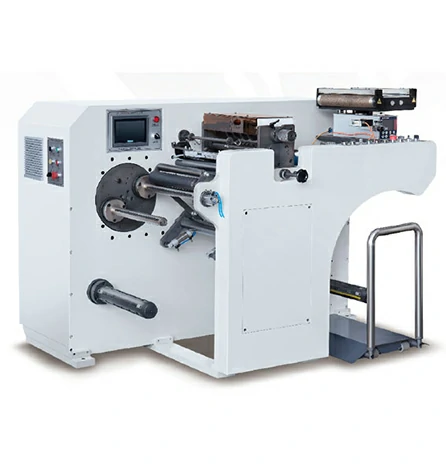
The Hongsheng double‑station rotary die cutting machine includes a waste rewinder that runs concurrently with the cutting operation. Stripping pins lift the matrix off the web, a driven shaft winds it into a separate roll, and the finished labels continue to the rewind station. The operator changes the waste roll at the end of the shift, not between every job.
| Feature | Benefit |
|---|---|
| Paper guide accuracy ±0.10mm | Consistent registration from first sheet to last |
| Servo drive with independent die motor | No gear change for different cut lengths |
| Waste rewinding during operation | Eliminates manual matrix removal between cuts |
| Ruler‑controlled knife adjustment | 450 cuts per minute on narrow web, stable on wide web |
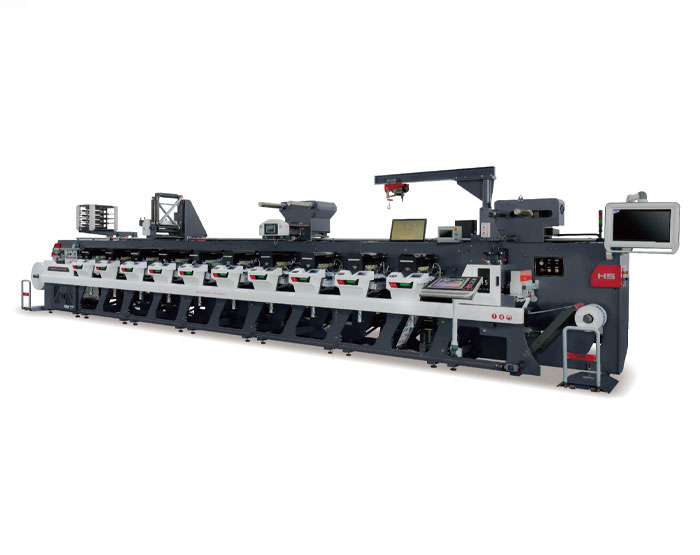
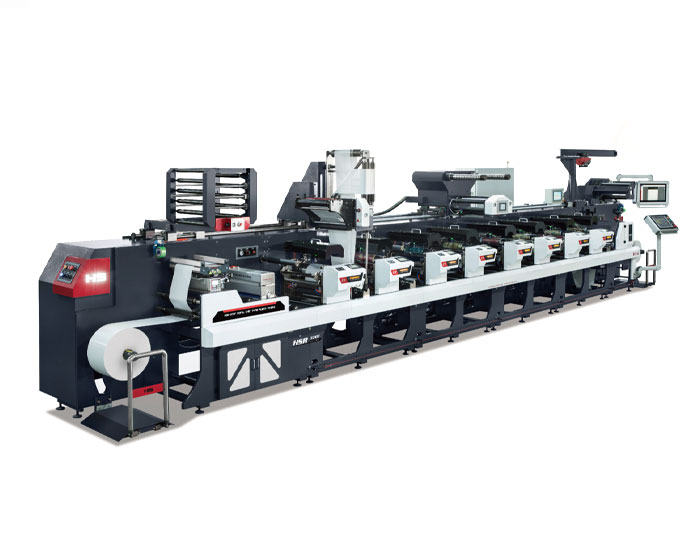
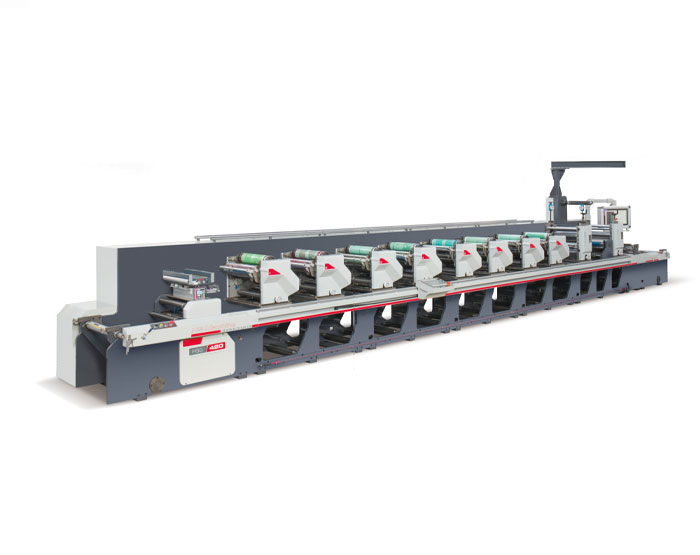
The modular design of the Hongsheng rotary die cutter platform allows the buyer to configure the machine for exactly what the plant runs every day.
Double die‑cutting stations: A single web passes through two cutter stations in sequence. This is used for labels requiring two separate die‑cut operations – for example, a peel‑and‑reveal label where the second cut exposes the hidden layer after the first cut removes the top ply.
Hot foil stamping unit: An add‑on station that stamps a metallic or coloured foil onto the label before die‑cutting, in‑line.
Sheeter station: For applications requiring individual cut sheets rather than rolls, the sheeter cuts the web into finished sheets directly at the delivery end, eliminating the offline guillotine step.
The machine’s unit configuration is described as modularly differentiated between flexo, die‑cutting, unwinding and rewinding units, allowing the converter to add capabilities without replacing the entire press.
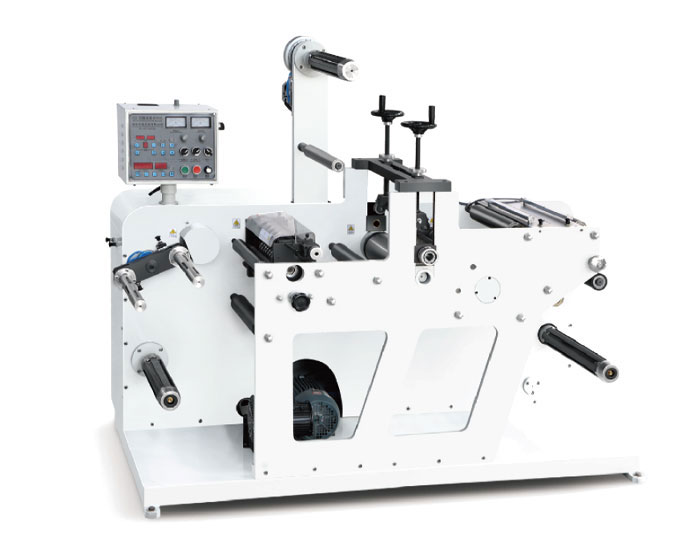
Hongsheng offers rotary die cutters in standard widths of 320mm, 450mm and 570mm. The choice depends on the widest label the plant produces.
The 320mm width suits small‑format pharmaceutical labels, cosmetic decals and electronic component stickers. The 450mm width handles mid‑roll pressure‑sensitive labels for beverage bottles and industrial chemical drums. The 570mm width serves the multi‑lane market: the wide web is slit into two or three narrower rolls in the same pass, doubling the output per machine hour.
For a flatbed die cutter, the standard widths are 320mm and 420mm, with a die‑cutting range of 300×300mm and 400×400mm. Flatbed cutters are slower than rotary models (cycle times measured in strokes per minute rather than meters per minute) but can handle thicker materials – folded carton board, multi‑layer laminates, and heavy cardstock that a rotary die would crush.
A mechanical die‑cutter that runs 400 cuts per minute on a 100mm label slows to 150 cuts per minute on a 200mm label because the web feed frequency is fixed. On the Hongsheng rotary die cutter with servo drive, the die cylinder rotates continuously at the controlled speed, and the registration is maintained by the web feed servo, not by the gear ratio. The cutter runs 450 cuts per minute on 100mm labels and 200 cuts per minute on 200mm labels – but the machine parameter remains within the specification rather than deviating from it.
The rotary die cutting station uses a ruled‑controlled knife that is adjusted for uniformity across the entire cutting width. The manufacturer describes the pressure as constant across the width, preventing the common problem where the die is set correctly at one edge but the opposite edge fails to cut. This uniformity eliminates the operator’s need to tilt the die block by hand.
The standard unwinding diameter for the Hongsheng rotary die cutter is 600mm or 1000mm. At full web width, a 1000mm diameter waste roll holds the matrix from roughly 10,000 running metres of finished labels – enough for a full shift of narrow‑web pharmaceutical label cutting. The operator changes the waste roll at shift end, not every hour.
[Image: Web path diagram of a rotary die cutting machine with integrated waste stripping, showing the matrix traveling to a separate rewinder and the finished labels advancing to the rewind station]
Hongsheng Machinery manufactures the rotary die cutter alongside its flexographic printing presses. The modular compatibility between the HSQ series rotary die cutter and Hongsheng’s inline flexo press means the same operator interface, servo control language, and die‑tooling fits both machines. A converter can run the web straight from the flexo press into the die‑cutter, perform waste stripping, slitting, and rewinding, and produce a finished roll of cut, stacked labels without intermediate handling.
The flatbed self‑adhesive die‑cutter HSM‑320/420‑H uses a system that completes die‑cutting, waste rewinding, and rewinding or sheeting in a single process. The flatbed model is specified for materials that cannot be cut cleanly on a rotary die – such as heavy cardstock with a high percentage of recycled fibre – at the cost of a lower production speed.
For a label die cutting machine that holds ±0.10mm paper guide accuracy at 450 cuts per minute, integrates waste stripping that runs automatically, and can be configured with double stations or hot stamping, the Hongsheng rotary platform fits converters running pressure‑sensitive self‑adhesive labels on paper, thermal paper, and plastic film – and also serves pharmaceutical, food, and industrial packaging lines that switch materials daily.
【Request a quote from Hongsheng Machinery】
Contact Hongsheng with your maximum label width, material type (paper, film, cardstock), and required number of cutting stations for a rotary or flatbed die‑cutter recommendation.
GET A QUOTE

 English
 Español
 عربي
عربي