A label startup in Vietnam had a budget for a one‑colour press and a five‑year plan for a four‑colour line. They could not afford a four‑colour machine upfront, but they worried about buying a single‑colour press that would become obsolete within 18 months.
Their solution was a stack flexo printing machine from Hongsheng Machinery that accepts additional print decks as modules. They bought the HSS‑320‑1C, a single colour flexo printing machine. Six months later, they added a second deck. Three months after that, a third. Within 18 months, they had built a three‑colour stack press without selling the original chassis or retraining operators on a different control system.
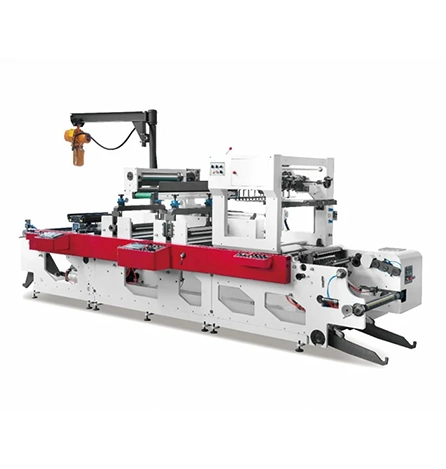
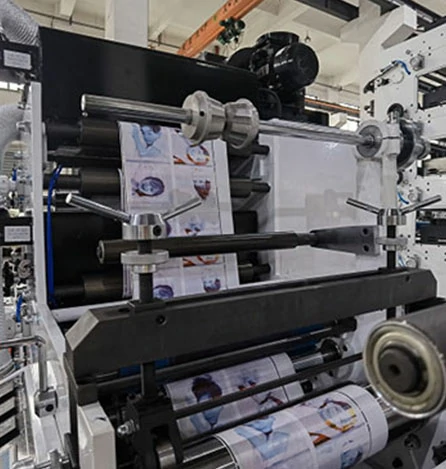
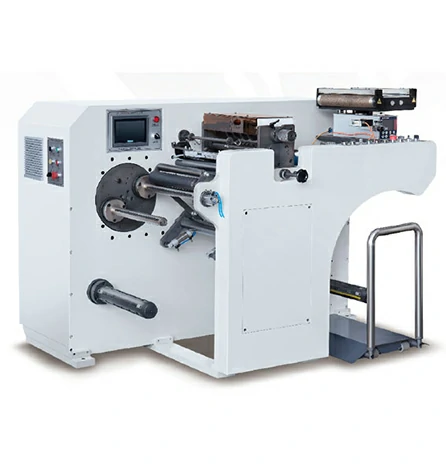
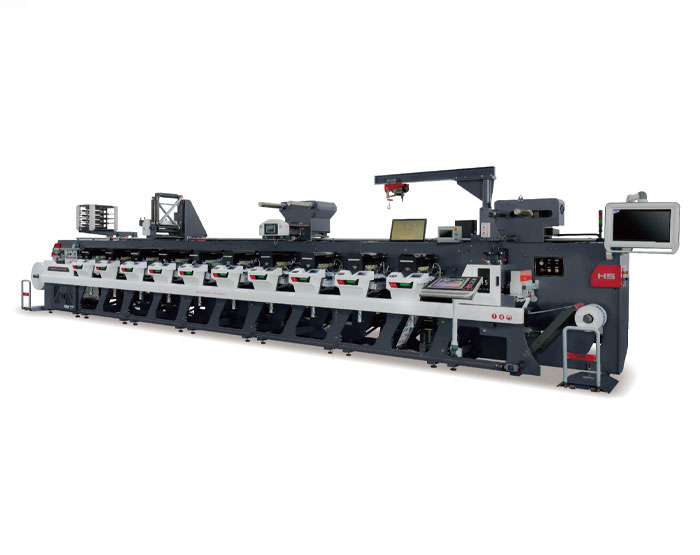
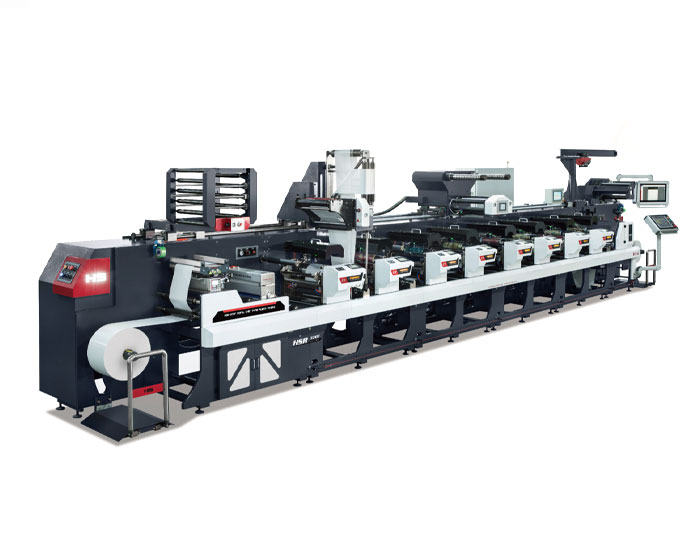
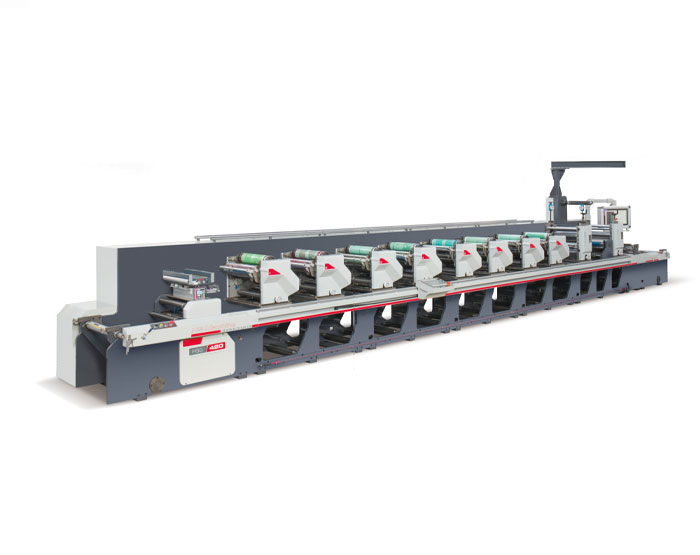
A stack flexo printing machine arranged in vertical decks is inherently modular. The HSS‑320 series uses the same frame, the same unwind/rewind stations, the same die‑cutting modules, and the same servo control architecture across all configurations from 1 to 6 colours. The single colour flexo printing machine (主词加粗第2次) is not a stripped‑down version; it is the base platform that accepts additional colour decks when the converter is ready. This guide explains how the modular design works, why the single‑colour machine still includes three die‑cutting stations, what the 200m/min speed and 340‑650mm width range cover, and how the servo registration system keeps colours aligned as you add decks.
Conventional stack presses are built for a fixed number of colours. Adding a deck later requires welding new frame sections, extending the drive train, and recalibrating the register system — a cost almost as high as a new press.
The HSS‑320 series uses a modular frame design where each colour deck is a self‑contained unit that bolts onto the existing chassis. The main drive and control system are sized for up to six decks from the start. The single‑colour machine (HSS‑320‑1C) comes with the same 6‑colour‑ready electrical cabinet, the same servo drives, and the same HMI software. The operator does not need to re‑learn the controls when a new deck is added; the system automatically detects the new module and updates the touch screen.
This future‑proofing matters for a label startup or a converter diversifying from paper to film. The single‑colour press pays for itself on basic jobs (barcode labels, shipping labels, nutritional back panels). When a customer asks for a two‑colour logo, the converter buys a second deck and installs it over a weekend. No second machine, no extra floor space, no duplicate spare parts inventory.
A label is not finished when it is printed. The printed web must be die‑cut to shape, the waste matrix stripped, and the finished labels slit to width. On a machine without in‑line die‑cutting, those steps happen on separate equipment, requiring extra handling and increasing the risk of misregistration.
The HSS‑320‑1C includes three die‑cutting stations even though it has only one printing deck. The punch line? A one‑colour label can still have a complex shape: a round cosmetic label, a contoured wine label, or a hang‑tag with a hole. The three stations allow the converter to run multiple die‑cut operations in one pass — for example, kiss‑cutting the label shape, perforating a tear line, and punching a hang hole, all without stopping the press.
The die‑cutting modules are servo‑driven and synchronised with the printing deck. When the converter later adds a second printing deck, the die‑cutting stations remain in the same positions relative to the web. The modularity preserves the converter’s investment in die tooling.
A 200m/min press running single‑colour on paper labels will produce roughly 12,000 linear metres per hour. For a 100m label roll, that is 120 rolls per hour — far more than a small label business needs. The speed is rarely the limiting factor.
The real value of the speed rating is not the peak number; it is the consistency at lower speeds. The HSS‑320’s servo drive maintains registration from 10m/min (for setup) to 200m/min (for production). On a manual‑clutch press, the register wanders at low speed, forcing the operator to run 50‑80m/min during setup and waste metres of material. The servo‑driven single‑colour press holds register from the first metre, so a 100m setup run wastes less than 5m of stock.
For a label converter who runs 10‑20 jobs per day, the savings in setup waste and time exceed the benefit of a higher peak speed.
The HSS‑320 series is offered in standard widths of 340mm, 370mm, 420mm, 450mm, 530mm, and 650mm. The width choice determines both the maximum label size and the number of across‑web impressions.
A 340mm press can print two‑across 100mm labels or a single 300mm wide shrink sleeve. A 650mm press can print six‑across 90mm labels for high‑volume pharmacy orders. The single‑colour machine is available in all widths; the entry‑level converter typically chooses 340mm, which fits a standard 350mm roll of label stock. When the business grows and they need wider capacity, they can trade up the unwind/rewind stations while keeping the printing deck — because the modular design extends to the web handling modules as well.
The default drying system on the HSS‑320‑1C is infrared (IR) with a water‑cooled roller. IR dries water‑based inks on paper and some films. It is less expensive to operate than UV and does not require specialised ink inventory.
For converters who plan to run UV‑curable inks on shrink films or BOPP, the machine can be ordered with a UV dryer on the single printing deck instead of IR. The single‑colour UV configuration (HSS‑320‑1C‑UV) is identical in all other respects. Because the dryer is mounted on the removable deck, a converter who starts with IR can later buy a UV deck and swap it in, keeping the original deck as a spare or selling it.
| Drying Type | Ink | Substrate | Operating Cost |
|---|---|---|---|
| IR (infrared) | Water‑based | Paper, some films (up to 38µm) | Low |
| UV (ultraviolet) | UV‑curable | BOPP, PET, PVC, shrink film (12µm+) | Higher |
The water‑cooled roller under the drying station keeps the film from distorting, which is critical when running thin shrink films even with UV.
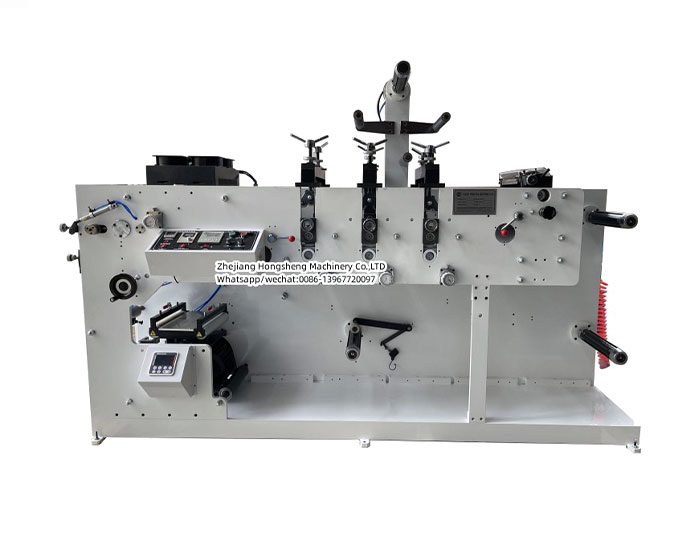
New label converters get orders for simple, single‑colour product labels and shipping labels. A multi‑colour CI press is overkill for barcode labels, and the energy consumption alone can exceed the job’s profit margin.
On a CI press, the operator must understand how the central drum affects register, how to adjust the impression on six stations, and how to balance tension across the entire web. The single‑colour stack press has one printing station. A new operator can be productive after one day of training.
When a converter grows beyond a single‑colour machine, they do not scrap the deck. The single print deck can be sold to another startup or kept as a dedicated spot‑colour unit for a high‑volume job. The modular HSS‑320 decks are interchangeable, so a used deck has a ready market.
The HSS‑320‑1C is not a stripped chassis. It includes:
Magnetic brake unwinding with web guide alignment for straight web travel
360° registration adjustment from the control panel, not by turning a handwheel
Three die‑cutting stations for complex label shapes
Slitting and rewinding as standard, so the finished roll comes off the press slit to width
IR dryer with water‑cooled roller to handle heat‑sensitive films
CE certification for European market access
The 1‑colour configuration is a complete label production line, not a DIY kit.
A label converter in Turkey started with an HSS‑320‑1C printing warning labels for industrial batteries. After eight months, they added a second deck to print a barcode in a second colour. After a year, they added a third deck to print a brand logo. The machine now runs three colours, die‑cuts, slits, and rewinds, all on the original chassis ordered three years earlier.
The owner’s comment: “If I had bought a second‑hand four‑colour CI press, I would have spent twice as much and still be paying for the maintenance on the gear train.”
Ruikang / Hongsheng Machinery (Zhejiang Hongsheng Machinery Co., Ltd.) built the HSS‑320 series for convertibility. The Single‑colour unit treats production as a stage, not a destination. Today’s single‑colour job is tomorrow’s spot colour; the same machine chassis grows with the business.
For a stack flexo printing machine that starts as a single‑colour unit and expands to six colours without scrapping the base investment, the HSS‑320‑1C delivers servo registration, integrated die‑cutting, IR/UV drying options, and a modular design that future‑proofs the converter’s capital spend.
【Request a quote from Hongsheng Machinery】
Contact Hongsheng with your target label width (340‑650mm), number of colours needed today, and planned colour count for next year to receive a modular press quote.
GET A QUOTE

 English
 Español
 عربي
عربي